
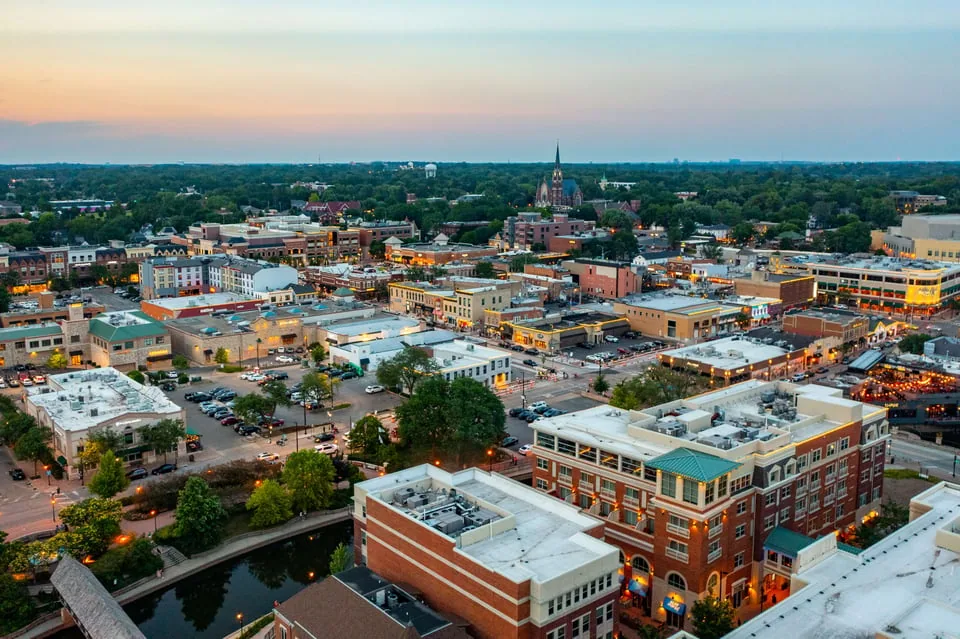
Commercial Roofing at Internationale Centre, Woodridge, IL
A loose metal edge can lift before the membrane field shows a problem. At Internationale Centre in Woodridge, within the Naperville, IL service area, we start by checking the edge termination, its attachment, and the transition to the roof membrane. The business park includes multiple companies and equipment and food businesses. That variety makes the first visit a component review at the requested property, with the manager confirming delivery routes and which roof areas can be accessed.
Woodridge connects to I-55 and I-355, which serve nearby commercial and industrial development. That regional access does not tell us which entrance is available for a particular building. We verify the gate, loading window, lift location, roof hatch, and any visitor or production route that must remain clear. The inspection record names those constraints before repair materials are selected or a larger work zone is planned.
The edge metal needs a stable receiving surface
We follow the coping or edge metal along the section where the concern was reported. The check includes fastener spacing, seams between metal pieces, cleat engagement, membrane termination, and the substrate that supports the edge. A face that looks intact can conceal movement below its hem. The perimeter detail review documents the exposed junction and distinguishes a loose metal piece from a membrane failure beneath it.
Before installing a repair, we test whether the existing substrate can receive the new attachment or flashing. If a prepared sample pulls away with the old material, bonding another layer to the same surface will not solve the connection. We identify where sound material begins and whether the repair can stop before a corner or downspout. If the edge cannot be checked from a safe access point, the report lists the lift or access change required for a complete review.
Photographs need a location and a finding
A close-up photo can show a split, but it does not tell the next inspector which elevation or roof section contains it. We label each image with a roof-plan location, visible component, and condition to revisit. The roof inspection traces the edge to adjoining seams, drains, curbs, and prior repairs. We also note whether a reported ceiling mark aligns with the observed path or needs further testing.
Internationale Centre includes several companies, among them Eaton and Hendrickson USA, as well as food and equipment businesses. Those names describe a multi-company business park; they do not establish a roof assembly or a current tenant schedule for the address under review. We coordinate with the property manager about tenant contacts and protected areas, then keep any operational restrictions in the work plan. The field findings stay tied to one building and one roof map.
A bond check narrows the repair boundary
Membrane and flashing repairs depend on a clean surface, suitable temperature, and compatible materials. We prepare a small area, perform the specified bond or weld check, and record the test location before expanding the detail. On an EPDM roof, seam adhesive and primer requirements differ from a thermoplastic weld. If records or field markings identify the assembly, an EPDM seam repair can match the existing sheet and its transition.
A passing sample only speaks to the prepared test area. We also inspect the surrounding membrane, the edge attachment, and any water path that could extend beyond it. If water has reached insulation or the deck, the repair may need a dry-out or replacement step before the surface is closed. Our repair scope identifies these dependencies so the manager can compare a localized fix with a broader correction.
Keep the receiving route open
Business-park work can involve delivery trucks, shared drives, employee parking, and service access. Before staging a lift or debris container, we confirm the route with the site manager and mark any driveway, loading area, or emergency access that must remain usable. We coordinate roof entry, material transfer, and pedestrian protection separately because the safest path for a crew may not be the path for a delivery.
The manufacturing and equipment business profile may help frame an inspection only when that use is confirmed at the specific building. We do not assume that all businesses in the park share one process or shift. If rooftop mechanical work overlaps with roofing, the manager identifies which curb or support remains in service. Our occupied-site work plan sets a daily close-in and a handoff to the contact who can release the next section.
Regional weather informs the test timing
The June 20, 2021 EF-3 tornado crossed Naperville, Woodridge, Darien, Burr Ridge, and Willow Springs. A manager reporting exposure can use that dated event to set inspection priorities, but we inspect the requested roof rather than infer damage from a map. We look at edge metal, membrane terminations, rooftop equipment, and debris impact, then record which details show a condition that needs repair.
Chicago O’Hare climate normals provide regional context for winter freeze and thaw cycles, not roof design loads at Woodridge. Before a sealant or adhesive application, the crew checks the substrate and product range. A weather hold can prevent a bond from being made on a surface that is too cold or damp. We report the condition and new timing so the property manager can keep access routes open while waiting for a suitable work window.
Keep repair history tied to the roof section
The layer record should state what material was observed, what document identified it, and which detail received a patch or replacement. We avoid using one photograph to describe a whole roof. If the location is unclear, we mark the nearest grid line, curb, or edge segment on the plan. A roof asset record can organize the section map, inspection date, photographs, test result, and open action for future reviews.
A business park owner may oversee multiple structures, but the report needs separate condition notes and approvals for each one. A manager comparing a second property in Woodridge should receive its own roof walk and receiving-sheet checks. The Naperville route also calls for a separate inspection. A common record format makes the properties easier to review while preserving the difference in assembly, exposure, and access. We identify who owns each remaining task and when it should be revisited.
Set access before the next test
Send the street address, roof plan, repair history, reported water location, access contact, and the manager who can release the roof. Note whether a loading route, rooftop unit, or business-hour constraint may affect the inspection order. We can then prepare the right lift, sampling approach, and protection. If earlier plans show an edge detail that is no longer present, we document the difference and establish what needs confirmation before pricing.
An active leak can be handled outside a normal appointment; emergency response is available around the clock, weekends and holidays included. The first visit protects the area, follows the likely path, and records the next test or repair. A condition report can also support a later comparison if multiple companies share the park. Share the test location and available access window, and we will coordinate the inspection and closeout with the person responsible for the property.
Commercial Roofing Questions
How can you tell whether loose edge metal caused a leak?
The cleat, fasteners, membrane termination, nearby seams, and substrate all matter; we compare them with the reported interior location.
Can the crew stage a lift in a shared business park?
We confirm the approved delivery route, loading times, parking restrictions, and emergency access with the property manager before mobilization.
What does a bond check prove?
It shows how the prepared sample behaves at that test location. Other roof sections and concealed moisture need separate inspection.
Can a property manager use one report for several buildings?
The report format can repeat, but each building needs its own photographs, system notes, test results, and approval record.
What should happen after a storm exposure report?
After a reported storm exposure, we inspect the address, document edges and penetrations, and recommend tests or repairs from the conditions found.