
Storm Damage Roof Repair in Naperville, IL
A cracked skylight cover can admit storm water while the curb flashing below it remains connected. We examine those junctions separately so protection at the upper assembly does not become an unnecessary membrane removal. Storm damage roof repair in Naperville, IL, follows the component found to be damaged. Where the cover needs attention from the responsible trade, we coordinate that access and examine the roofing transition for its own repair requirements before setting the work boundary.
Commercial Roofing Naperville assesses damage to commercial roof fields, edges, flashing and accessible supports. A reported storm can leave several different conditions on one building, so the inspection order should distinguish immediate exposure from defects needing closer examination. Naperville's May 27, 2019 hail report and the June 20, 2021 tornado path provide dated local examples of impact and wind exposure. The requested building's physical details guide the protection and repair sequence.
Loose components need controlled protection
A displaced metal section can continue loading its remaining fasteners while nearby sheet material is exposed to rain. We assess safe access, structural concerns and the condition of the support before approaching the damaged area. Where temporary stabilization or dry-in is suitable, its attachment needs a secure receiving boundary. A covering that moves against loose metal can add wear rather than provide a workable first protection.
We arrange urgent protection of an active opening at any hour, including weekends and holidays. Immediate action may differ from the permanent repair because weather, surface moisture or access prevents suitable preparation. We explain the component stabilized and the next examination it requires. The manager can then coordinate interior protection and follow-up access without treating a temporary closure as the finished roofing connection.
Impact changes both sheet and accessories
A small opening in the membrane may be easiest to see beside an accessory that has also been struck or displaced. We inspect the sheet and adjoining seam, then examine the accessory's connection to the roof. The repair can need compatible membrane work alongside correction of the component that created or exposed the opening. Patching beneath a sharp or loose edge leaves the contact that could damage the replacement material again.
Naperville had a reported hail size of 1.5 inches on May 27, 2019. After a reported impact exposure, a hail damage examination follows the requested membrane, flashing and roof accessories. Material condition and construction affect how impact appears. We check suspicious locations directly and identify any support damage that changes the repair from surface treatment to a limited opening and replacement of affected layers.
Displacement directs the attachment check
A lifted sheet can expose the connection beneath it and alter the load on adjoining material. We examine its fastening or adhesion, the insulation or board receiving it and the perimeter transition. The failed connection can involve more than the visible tear. The repair needs suitable support and attachment so the new sheet does not finish on material already loosened by the same movement.
The June 20, 2021 tornado crossed Naperville, Woodridge, Darien, Burr Ridge and Willow Springs. For a building with reported wind exposure, we inspect displaced perimeter components and the field areas adjoining them. Repair of a wind-disrupted attachment follows the connection into the supporting assembly. At a property in Woodridge, the same inspection can establish where removal needs to reach firmly supported material before permanent close-in.
The opening can conceal wet support
A roof that has been temporarily closed may still contain water in the layers beneath it. We examine the support around the damaged area and use appropriate openings where moisture affects the proposed boundary. A localized puncture with sound adjoining material may allow limited replacement. Moisture extending beyond that opening can require additional examination before the manager receives a settled removal area.
An infrared investigation paired with confirmation can help investigate a wider uncertain assembly under suitable conditions. We relate the findings to the damage and drainage arrangement, then identify which layers need removal and what will support their replacement. The moisture question should be resolved alongside the entry connection; replacing wet insulation while leaving a failed adjoining detail would leave the new material exposed to the same water path.
Damage access follows the occupied room
Water above an occupied room needs coordination before a damaged roof detail is opened further. We ask the manager about electrical concerns, equipment restrictions and the use of the space below. Interior protection or isolation may need to precede roof investigation. An accessible exterior area does not by itself make the room beneath it ready for debris, dust or temporary exposure during repair.
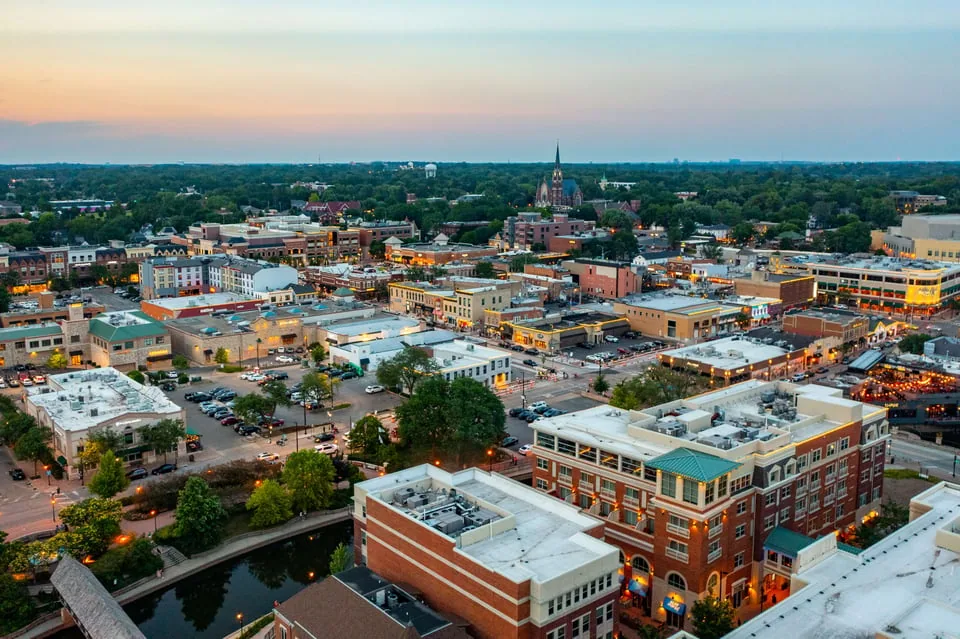
Downtown Naperville combines shops and restaurants. At a requested business there, repair access can intersect with customer entrances, deliveries or rooftop equipment serving the occupied interior. We arrange staged roof work above active spaces with a manageable opening and closure sequence. The method should preserve usable entrances and identify any equipment interruption before the repair reaches its connected flashing or support.
Permanent repair follows the damaged connection
A permanent scope identifies damaged materials, the removal boundary and the connection to retained roofing. We describe whether the repair addresses a membrane puncture, seam separation, perimeter reconstruction or another component. Existing material must accept the proposed preparation and installation method. The comparison should distinguish that repair from broader deterioration elsewhere, so the manager can understand what the storm-related work will restore.
We can provide roof findings and repair documentation for claim coordination. The record separates observed damage, temporary work and the permanent scope, with locations that connect photographs to the building. Claim and coverage decisions remain with the insurer and relevant parties. Our work explains the physical condition and the repair needed to reconnect the affected components.
Cost and timing follow access, extent of damaged support, compatible materials and any equipment or metal reconstruction. A simple opening in a serviceable field differs from a torn transition with loose backing and several affected layers. We explain those differences before permanent work begins. The manager should know which condition can be repaired within a usable boundary and which needs more examination, rather than receive one patch description for every damaged location.
The rebuilt area also needs a clear maintenance approach. We identify service paths or nearby equipment work that could disturb the repaired connection, then discuss suitable protection before normal roof traffic resumes.
Commercial Roofing Questions
Should a loose accessory be removed before the membrane is patched?
Its contact with the sheet needs assessment first. We examine securement and any sharp or moving edge, then arrange suitable stabilization or component repair. Restoring the membrane beneath an unresolved contact can leave the new material exposed to damage from the same accessory.
Can storm damage remain beneath a temporary dry-in?
Wet insulation, detached material or damaged support can remain after water entry is limited. We identify the next examination needed for the permanent scope. Temporary protection keeps the area covered while that work is arranged; the repair still needs a sound receiving boundary and compatible installation.
How do you distinguish impact damage from an old patch defect?
We examine the physical form, location and adjoining material, comparing the findings with available earlier observations. An old repair may need attention regardless of the reported event. The findings should identify what is observed and the repair it requires, while claim interpretation remains with the relevant parties.
Why could removal extend beyond the visible storm opening?
Affected support or moisture can continue under adjoining sheet material. We examine that condition and establish where the replacement can connect to suitable layers. Extending removal should follow a physical finding, with the manager informed about the component changing the repair boundary.